Tuesday, September 5, 2017

Cameraperson


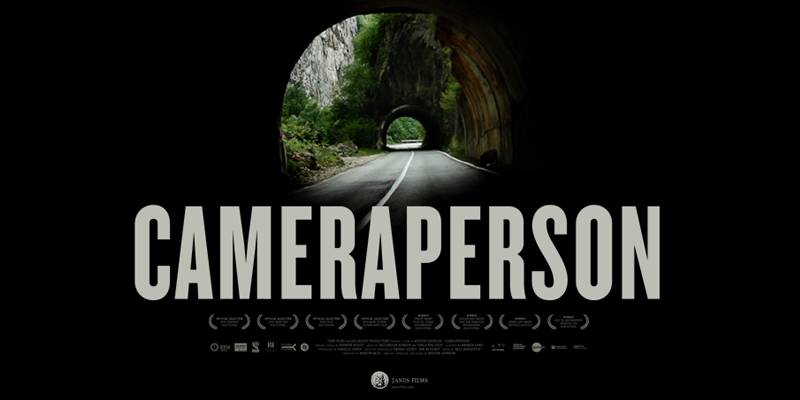
Cameraperson is a memoir film from documentary cinematographer Kirsten Johnson. She took moments from throughout her 25 years behind the camera for other people's films and created this movie that summarizes her experience, using her visual perspective to talk about who she is and how she sees life. Rather than a linear storyline, the film organizes scenes around themes that express the range of joy and pain unique to her job and life. Just as a camerperson can choose exactly where to focus on an image to say something without words, Cameraperson uses a lifetime of filming to say something unique and beautiful without having to actually say anything at all.

Like so many of the best documentaries, this is a personal film. What makes this unique is that Johnson has these vignettes recorded from throughout her career where she is focusing on something outside of herself that when you pull together, using specific pieces, tell a lot about who she is. Johnson uses her own natural visual eye - always through her camera - to tell the story on its own without any direct narrative or description. She had originally created a more direct cut with voiceovers, focusing on the most traumatic and moving things she's captured. Eventually, though, Johnson and her team relied on the visuals to speak for themselves, using shots and scenes, juxtaposed in meaningful ways, to create a deeper meaning than you could ever really explain using words. More importantly is how the little bits they choose to use key into who she is without showing her at all.

Nels Bangerter, Editor for Cameraperson, was tasked with starting the process anew a few years into the project by taking several disk drives' worth of video and paring it down to tell a story. Rather than show some of the most objectively significant or traumatic things she'd shot, he focused specifically on the moments where we are aware of her presence, though rarely when we see her onscreen. Normally, a camerperson's directive is to go unnoticed, allowing the subject to be the focus rather than the person behind the camera. He said, "We began to realize that these tiny moments on the edges of other films is where her presence comes from...In essence we were making a very thoughtful, emotional, and revealing outtake reel." The mechanism by which this is done is often simple yet ingenious, like the short montage of many quick moments of Johnson walking with a camera, often backwards, and attempting to follow one or more subjects. Or a supercut of the moments where people realize they're being filmed. The observations are often weightier and become more personal as the movie progresses, her mother's experience with Alzheimer's and then eventual death playing a big role.

Using the visuals to tell the story leaves a bit more mystery in the film and allows us as the audience to arrive at conclusions on our own. At times Johnson uses the voices of her own subjects to comment on and share her feelings. For example, during a heart-wrenching scene in a Nigerian hospital we spend a few minutes watching a midwife work with a baby struggling to breathe. We then cut to an entirely separate sequence, distinct in date and time, of a man reflecting on having relived an intense moment of his past. He comments on how he can feel that emotion again so readily when he's not expecting it. While this is interesting, it becomes clear why we're watching it when we jump directly back to the hospital in Nigeria. Johnson is using his words to express how she feels watching and thinking about that baby and that hospital. And then, in the more meta context of Cameraperson, how these stories and experiences affect her life and stick with her. By showing us these principles, rather than telling us, we feel what she feels more readily just as we see what she sees through the camera. It's a brilliant way to communicate, even more so because when we as the audience make the realization on our own we may even jump to our own personal experiences and connect the idea directly to our own reality. And that's how storytelling like this can make an impact.

Friday, August 25, 2017

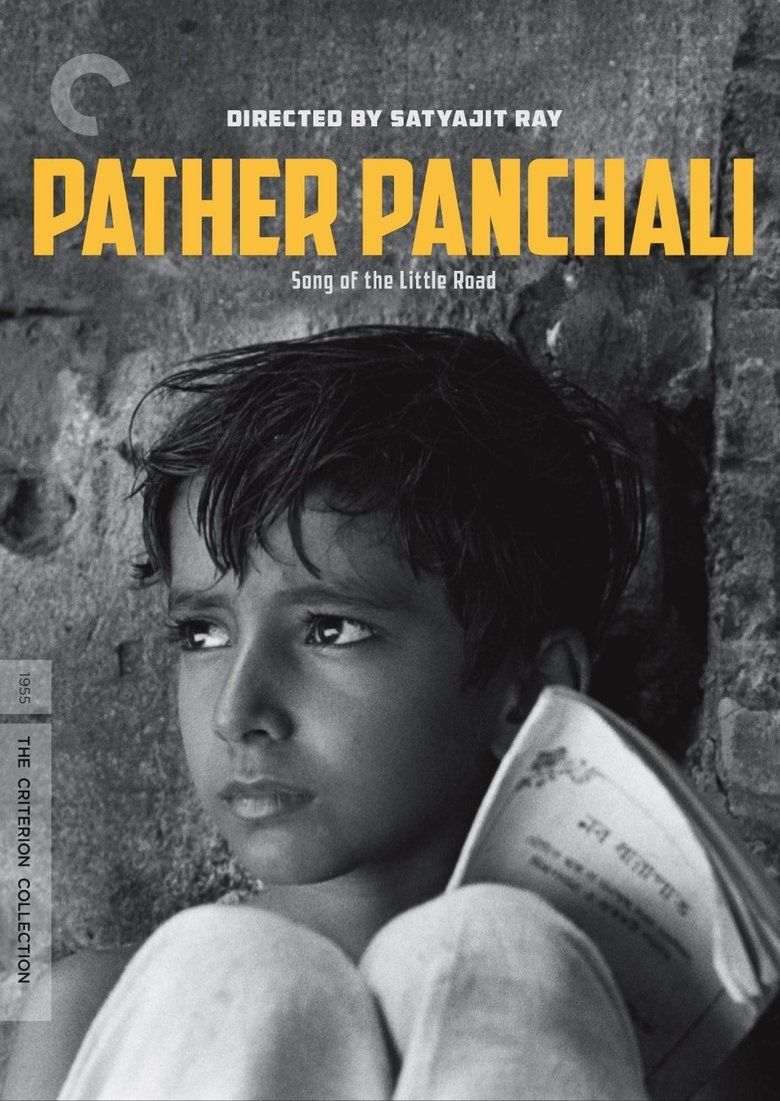
Pather Panchali

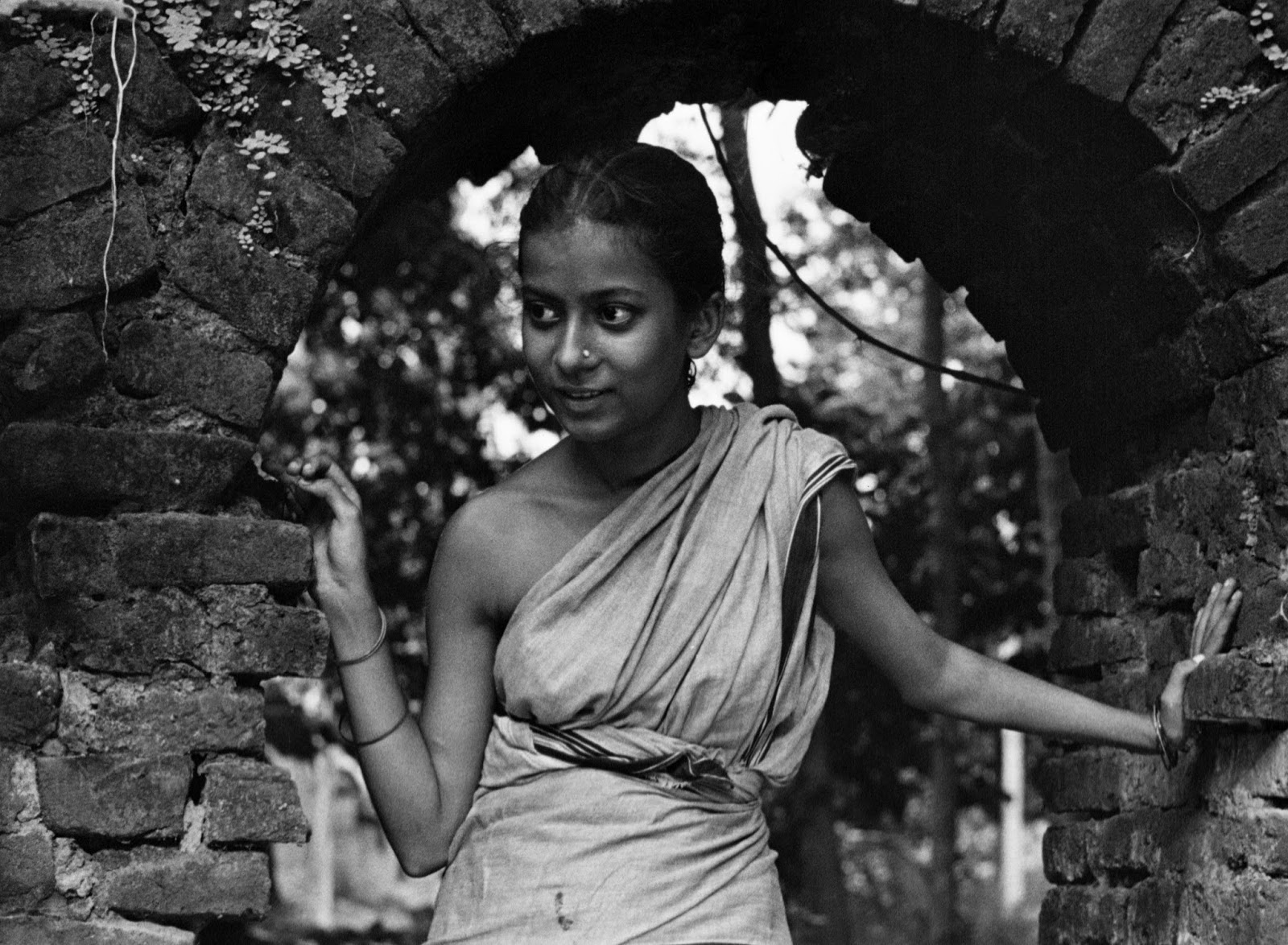
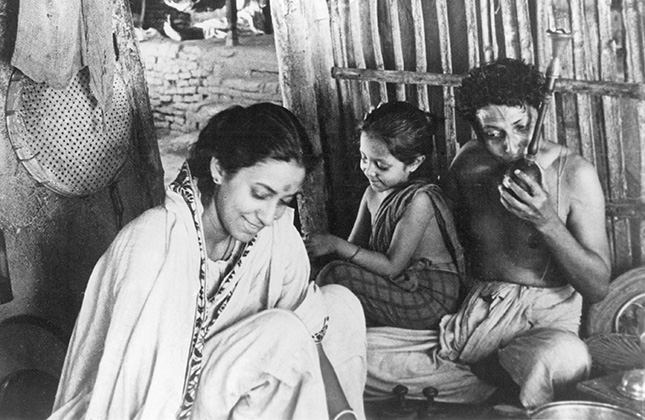
Pather Panchali, translated as song for the little road, is a simple, heartbreaking story of a poor Bengali family. Like most families, money is their biggest concern, although the mother and father seem to feel differently as to what degree. The mother is mostly left alone to care for her daughter, son, and an old aunt. She feels the pains of their poverty most potently as her husband, a self-declared poet whose ideas rarely come to fruition, is often gone for weeks at a time or more looking for work. Although this is the first in what became known as the Apu trilogy following the life of the young boy, in this film he is mostly observer of the women around him who struggle to live together. They clash in the natural ways that young girls often do with their mothers or a woman might with extended family living as not-so-welcome house guests. There are moments of relief along with some moments of terrible tragedy. These are problems faced regularly by families in almost any culture but here the consequences are, at times, more severe.


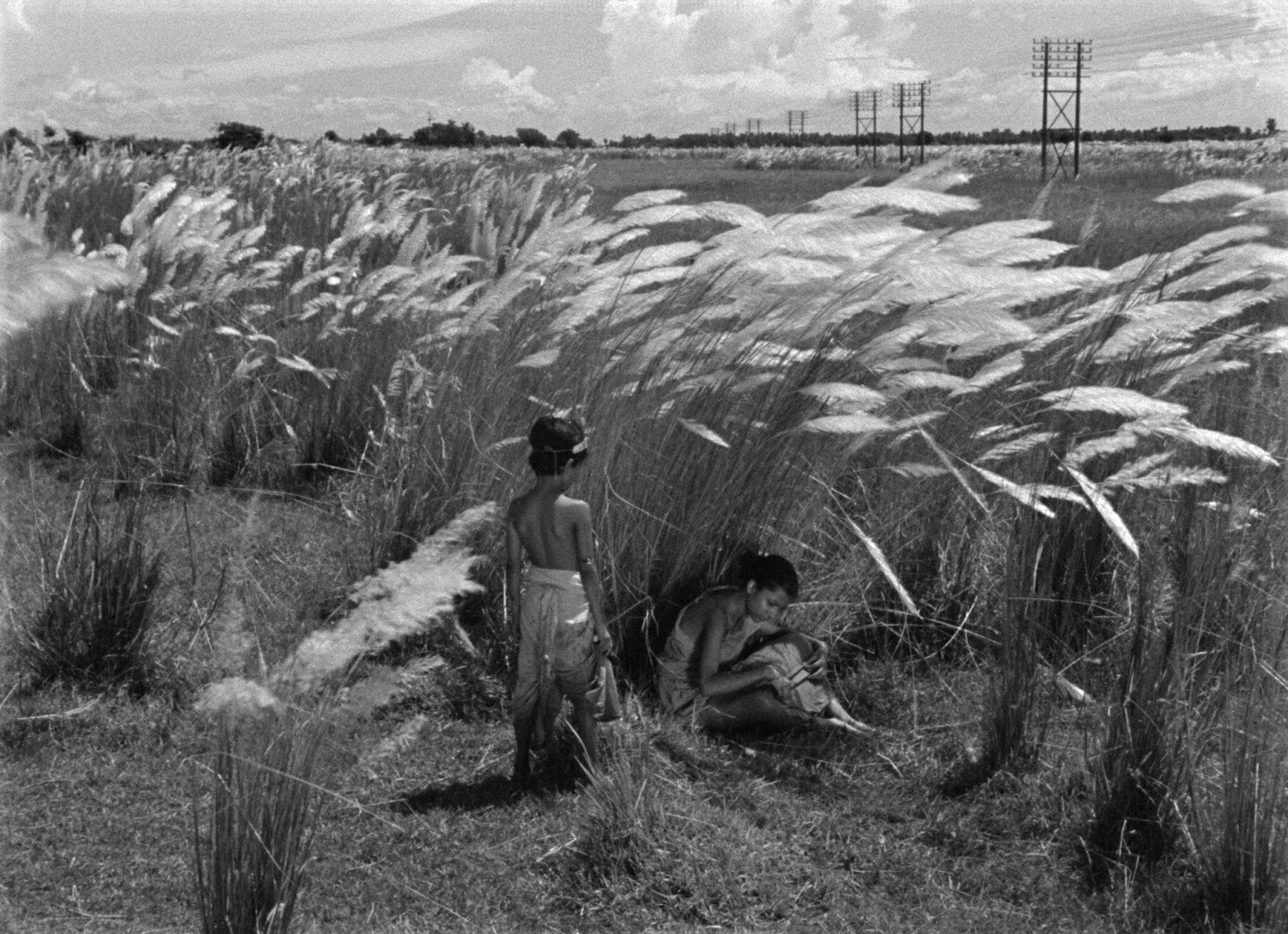
Along with displaying the reality of the relatable drama of life, director Satyajit Ray takes the time to explore and follow the digressions of life that always surround us, even amidst turmoil. Siblings argue constantly but just as easily reconcile and play. Neighbors and friends stop by and help but also add obstacles and make demands. The camera is especially descriptive as it focuses on small details, both mundane and divine. He's not afraid to sit and watch insects on the surface of the water or a pond of water lilies. Whether in the home or out in the jungle as children play, it's all very natural. The eye for beautiful frames is a great example of raw talent combined with beginner's luck and a clear purpose overcoming a complete lack of experience on the part of almost all the cast and crew. Although he's not as central to the drama, the bright-eyed boy Apu reminds us that children aren't fully aware of the extenuating circumstances that make up their lives and are always just themselves, finding it as easy to complain as to forgive.


It often happens that when you experience something personally groundbreaking that's contemporary to you, you imagine it's ideas are novel and innovative. Then, as you go through life you realize an earlier work did it first and better and your respect for that initial artifact diminishes in accomplishment, if not in its personal impact: "There is nothing new under the sun." An example of this is the Charlie Kaufman-written film Adaptation, directed by Spike Jonze. The movie is the story of itself. It follows its own screenwriter attempting to adapt a nonfiction memoir on orchid thieves for the big screen. As you watch you feel it is being written and produced before your eyes. Years later, in making my way through come of the cinema greats I would come to watch Fellini's masterpiece 8 1/2, a story of an acclaimed director attempting to come up with and produce his next feature only to end up creating a movie about the process itself. I learned Fellini did it first and best. This is all a meandering way to say that Ray's debut film Pather Panchali is the spiritual ancestor to Richard Linklater's longsuffering 2012 film Boyhood. Although I love that film, as with Fellini, Ray did it first and best.


This film, while not purposefully ambitious to the degree that Linklater's 12 year-long production was, it's struggles to get financing coming in starts and stops meant filming took place over three years. This meant big risks in relying on key cast members to be continually available, especially those so young and old as some of the key players here. More importantly than the logistics, though, Pather Panchali is similar in how sits in the life of a family. I laughed as the wife mentions home repairs that keep getting pushed back while the husband requests she look at life more positively even as he ignores the problems he's avoiding. The results of his procrastination have some devastating effects. But many of these scenes ring quite true to some that have played out in my own home. Undoubtedly some aspect of this movie will do the same for you.

Wednesday, August 9, 2017

The language of The Umbrellas of Cherbourg

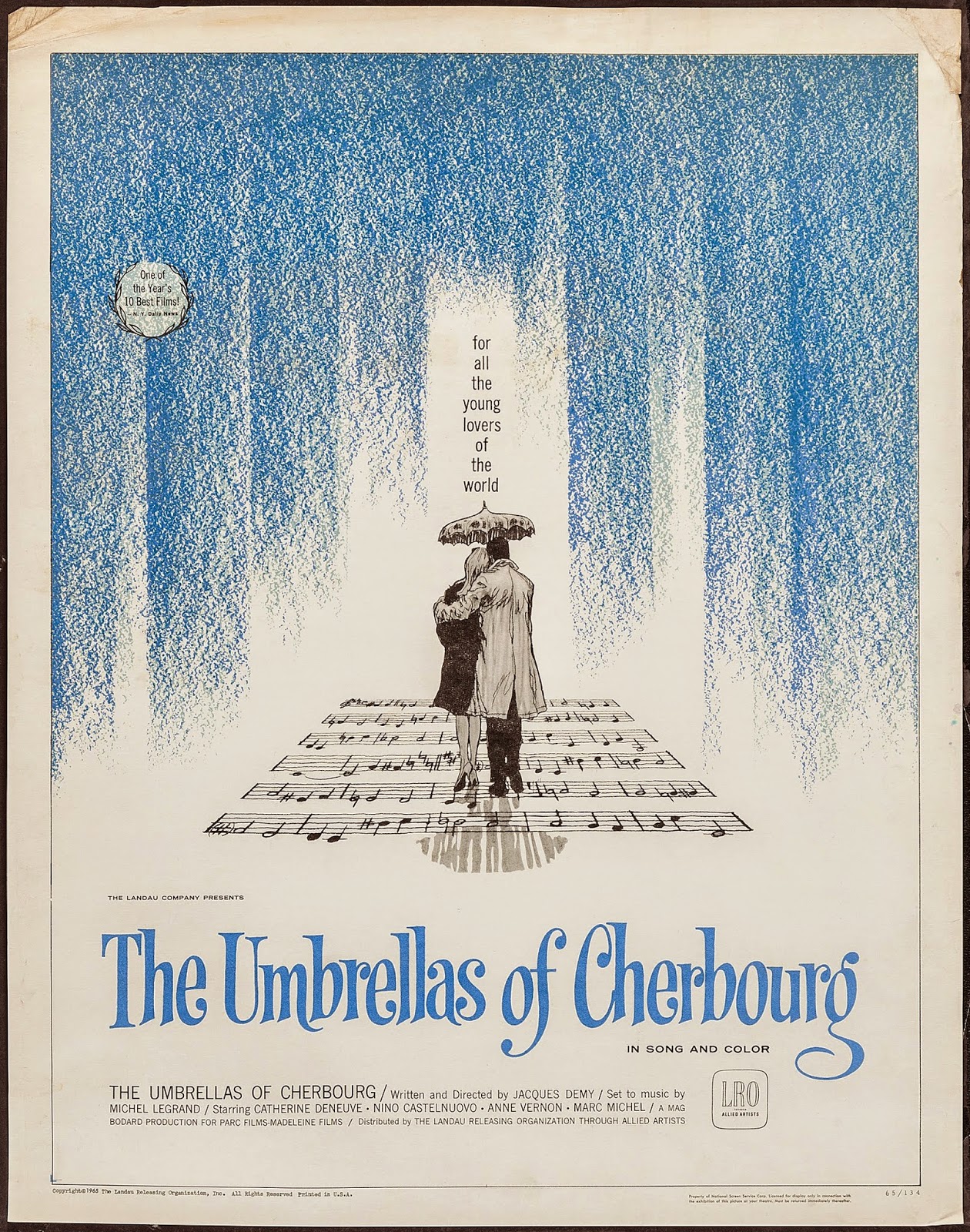
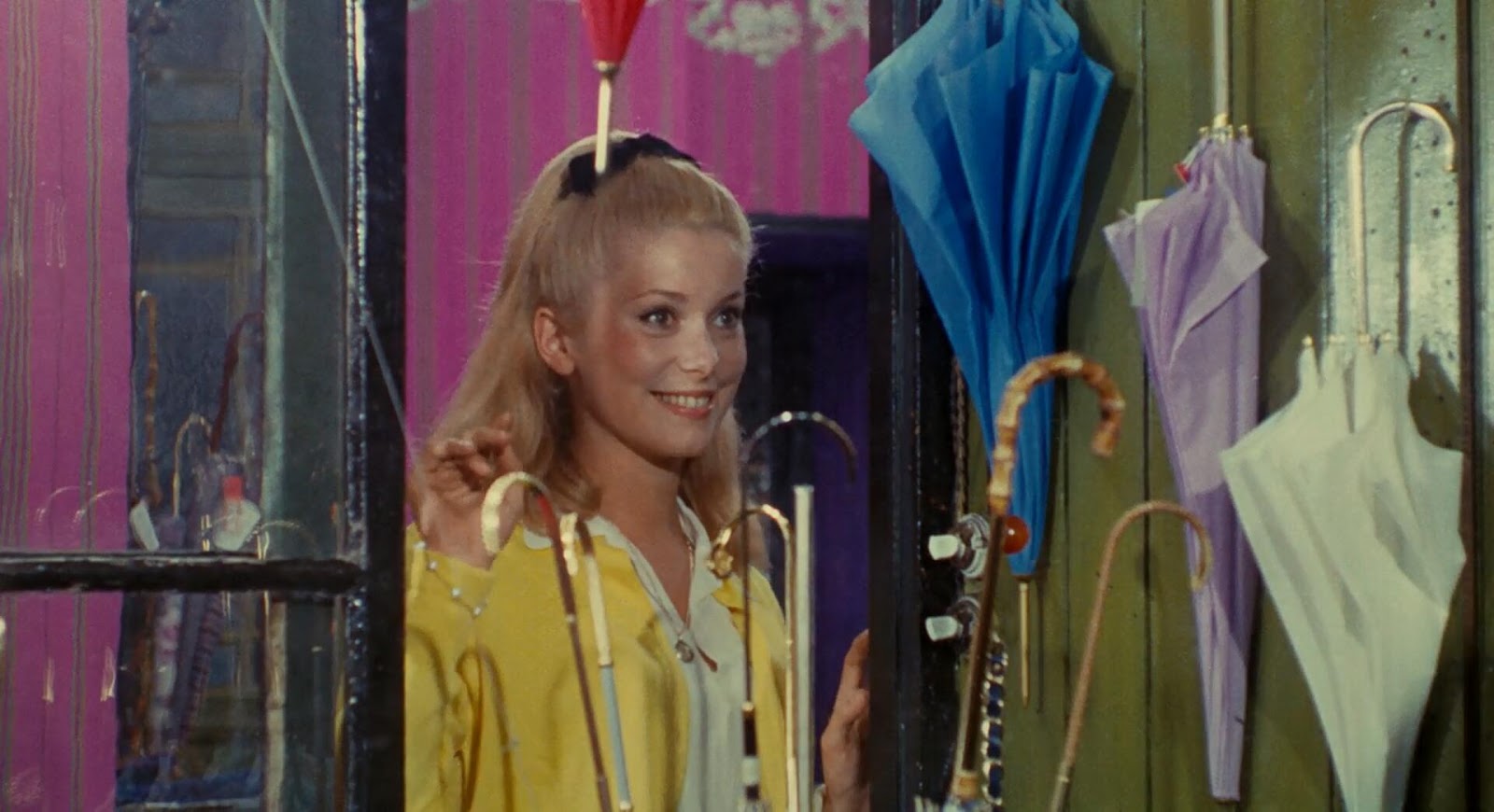
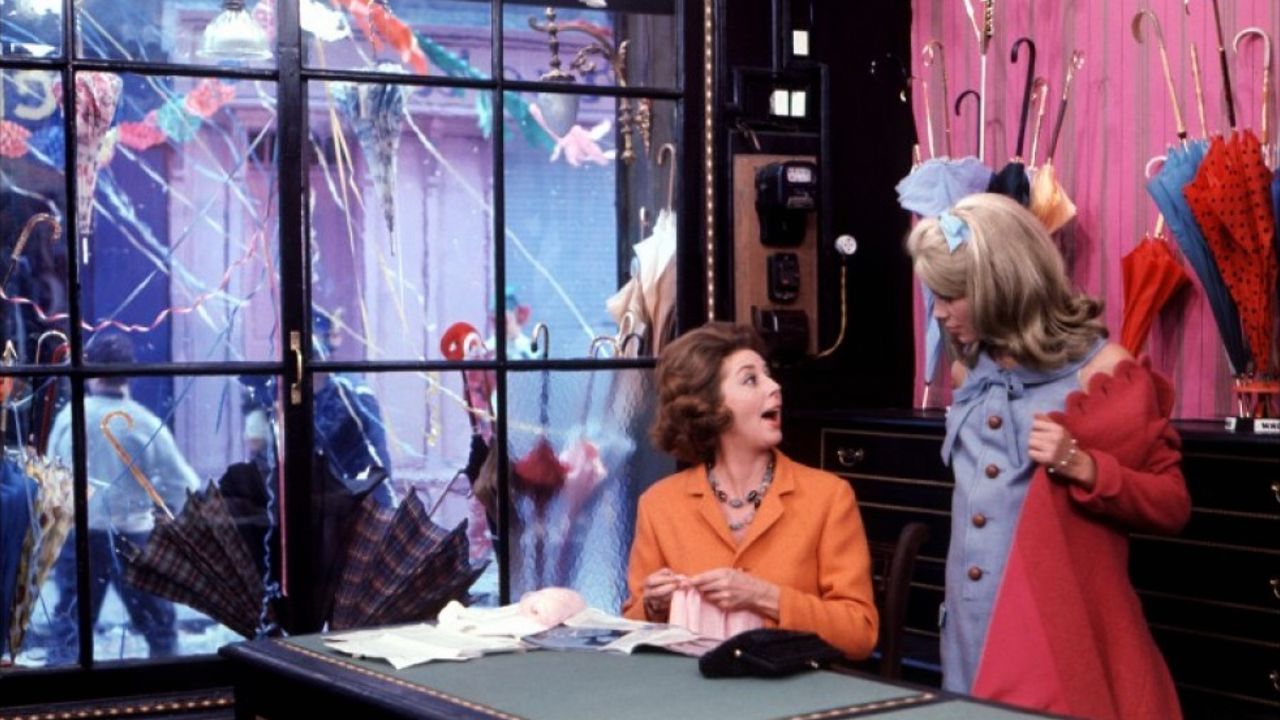
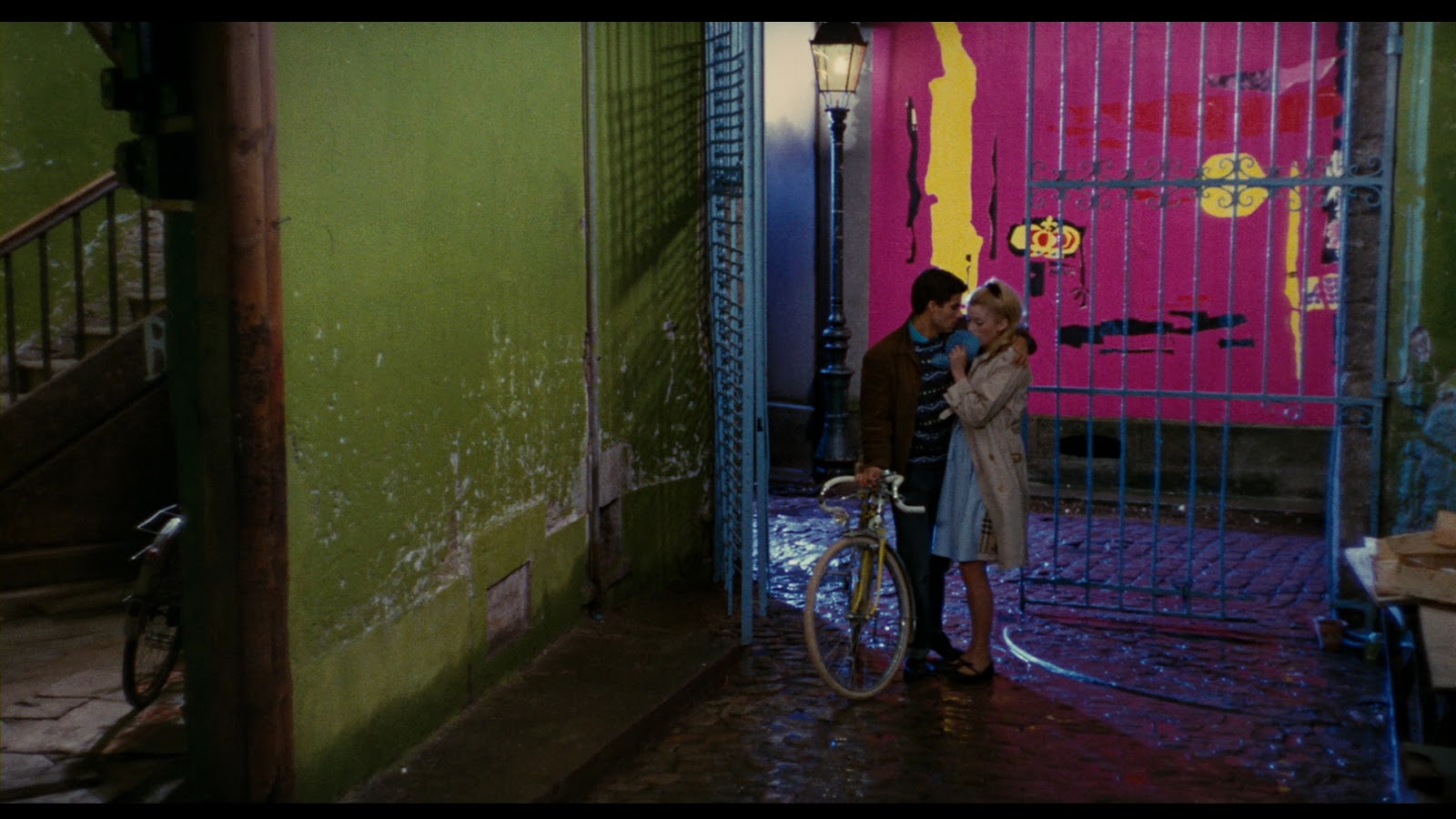
The Umbrellas of Cherbourg is a bittersweet tale of love, rich with 1950's & 1960's style and color. It is most recognized for its innovation: every line of dialogue is sung. While that is novel, and was certainly surprising in 1964 when it debuted, I think there's more behind its legacy. While so completely French, director Jacque Demy's vision is remembered and rewatched the world over. That's because it creates a new language melding film and music that transports the audience for a more direct emotionally moving experience.

One of the things about speaking in a new language is that you are released from your inhibitions. When I served as a missionary in Mexico for two years the first big challenge I had to overcome was, of course, speaking Spanish. I wasn't fluent and even after a solid two months of intensive language preparation, I still was only at a basic high school level. When I arrived in the country, however, I was paired with a native speaker that knew no English. And so with complete immersion (all I did all day was walk around and talk to people) I was soon dreaming in Spanish. That's when I found I began to speak more openly about emotions and feelings, both in what I shared and in what I asked about. It's a more direct, less complicated language and I had none of the social training that would've taught me to cringe at a curse word or shy away from direct expression.


Watching The Umbrellas of Cherbourg, a film where 100% of the lines are sung, was a similar language-learning experience. My impression of the singing style was awkward, at first. I don't know French so one issue is that I initially struggled trying to fit the English subtitles somewhere into the music. There's a learning curve that comes through the length of the film. What seemed strange at first and without melody, turned into a new dialect, of sorts, with an underlying bit of fantasy and a more direct emotional connection. As I succumbed to the constraints and rules of this mode of expression and stopped looking for the old musical language I knew, I began to really enjoy it.

The singing is sweet but the actors aren't virtuosos. There is none of the showboating of the big Hollywood musicals of the era. Demy reasoned that in traditional musicals you have starts and stops of the story with a cycle of exposition, dialogue, then song, then the story continues until it stops for another song, and so on. His goal was to create a musical atmosphere that flows continuously throughout the film's running time. While I still love the bombastic showtune-style of the greatest musicals like Singing In The Rain, Umbrellas uses music in a different way. It is the more direct influence of the recent hit La La Land, so if you liked that and want more or it didn't fully connect and you want to understand where it's coming from, watch this 50 year old predecessor that broke that ground first.


Umbrellas is fund of beautiful melodies and musical lines, but there is no delineation between separate songs. Instead it is one continuous musical experience. Demy and composer Michel LeGrand literally sat down at a piano with the screenplay and a blank sheet of music paper side by side and went through, page by page, adding notes to the written lines. In an interview, LeGrand admitted to struggling through the process. A key breakthrough came as a bit of inspiration when they translated the natural timbre of the spoken line for a scene, keeping the same rhythmic melody. That became the one truly memorable musical theme from the film, and the rest followed. The core meaning of the words and action are paired with the emotional message of the music. For me, the effect took root and started to swell as the story progressed. And yes, there is a story. It's about young love, loss, and the path that life leads. It's almost a "tale as old as time."