Tuesday, July 8, 2014
Film: Life Itself
Perhaps you've had the opportunity to have a friend who shares your taste in movies, books, and music enough that you know you can always turn to that person for a fun and meaningful discussion about whatever it is you've recently been watching, reading, or listening to. You look forward to talking to this friend because when you agree it is so validating to have someone understand how you see things, and because when you disagree there's no one you want to convince more. Starting around 2007, Roger Ebert slowly became this friend for me, until it became almost impossible to watch, or consider watching, a movie without seeking his perspective. And just to clarify - yes, I did have friends in real life too.
Like many of my generation, all I knew about Ebert for years was that there was a TV show with a couple of guys talking about movies, Siskel & Ebert, and a catchphrase, "Two Thumbs Up." I had seen the show occasionally on PBS, and I remember watching it after Siskel passed away and it became Ebert & Roeper, with Richard Roeper. So when I was in college and found myself getting more interested in getting a critic's take on movies I had watched and kept seeing Roger Ebert's reviews pop up in searches online, it was natural for me read his reviews. The vague sense of the history behind the name seemed authoritative and most times I wasn't interested in reading more than one critic's review. Then, over time, I started to realize I often agreed with Roger. And not only did I agree with him (most of the time) but I found that he would frequently put words to my feelings, explaining how I felt but with more eloquence. After a while it became routine for me to read Roger's reviews of movies I had seen or was thinking about seeing.
Part of the reason I was drawn to Roger's site, rogerebert.com, was because he had been successfully making a concerted effort to grow his online presence. As an early adopter to online and mobile technology, like Twitter, Ebert had been touching a new generation of movie nerds and I was part of that wave. After dealing with cancer for years his jaw was removed, making it impossible to speak. In 2008, right as I was realizing how much I enjoyed Roger's writing, he had written his first blog post and was entering what would be the final stage of his life and career, in which his celebrity and popularity grew more than ever before.
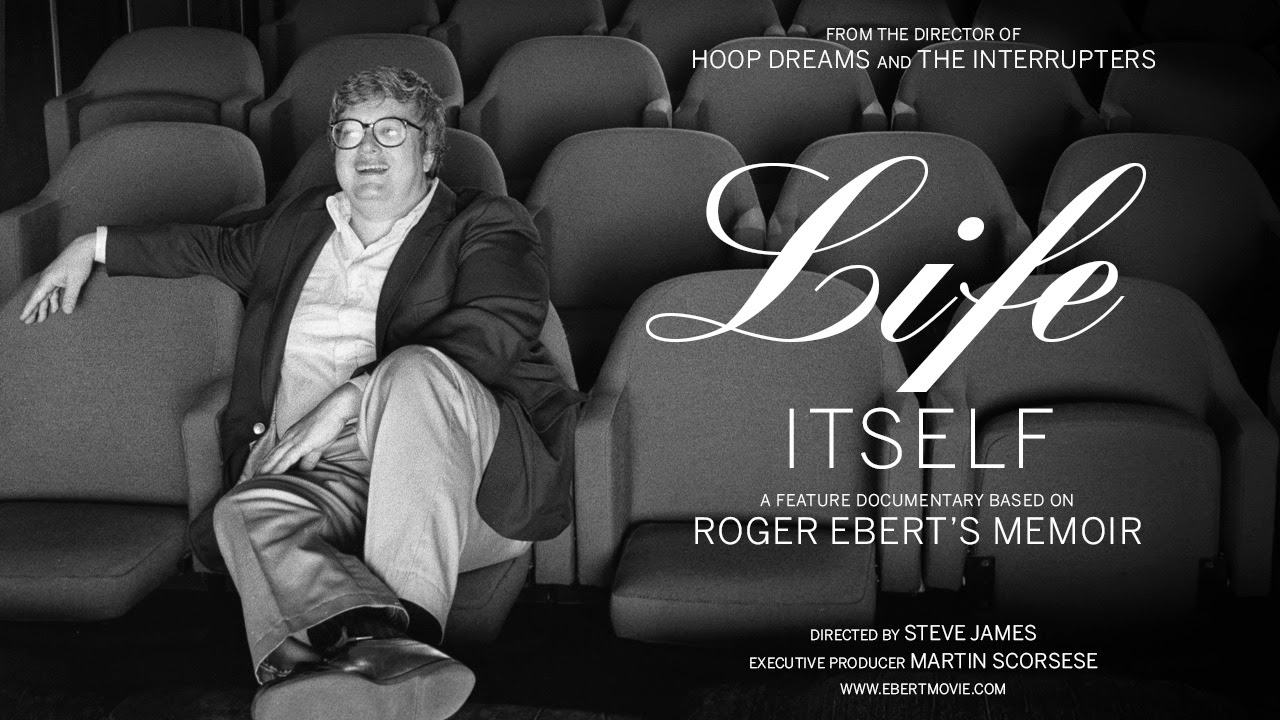
Roger Ebert passed away last year and now I don't have that friend to turn to - at least not for any new movies. More importantly, though, his family, friends, and followers feel the absence of his positive and life-affirming perspective. The documentary film about Roger Ebert, Life Itself, was just released last weekend. It is a beautiful biopic that expertly takes the audience through Ebert's life, extracting, along the way, the essence of what made him tick so that it teaches a few things about *ahem* life itself.
I was in San Francisco over the weekend and so I had an opportunity to do something I'd never done: See a film while it was in limited release. My wife, Karen, and I saw it on one of 23 screens showing it around the country. We were seated in fancy electric-reclining leather chairs. We were uncomfortably in the front row of a tiny theater, giving me a headache by the end of the show (which cost us $25). These things didn't really bother me all that much, though, because the movie itself was an honest, sometimes humorous, touching, warts-and-all portrayal of a man I admired.
The story is told through a mix of interviews with family, friends, and colleagues, along with archival footage of Roger from his show with Gene Siskel, a mix of photos and written artifacts, and then new footage shot by the director, Steve James, during the final months of Roger's life. Using those final days and weeks as a foothold, we jump back in time moving through the different eras of his life: growing up in Illinois, college days as editor of the newspaper, the start of his professional life and his alcoholism, his growing fame, the TV show and relationship with Siskel, his marriage with Chaz, his family, his illness, the growth of his popularity online, and then his death and the response of fans and loved ones.
In his review, Matt Zoller Seitz, editor-in-chief of rogerebert.com, writes that it is about two loves stories: that of Roger with his wife and now widow, Chaz, and the relationship with with rival/partner/brother-in-spirit Gene Siskel. The segment covering his contentious, big-brother/little-brother type partnership with Siskel and the 30+ years they did their TV program together is perhaps the longest and most interesting section of the film. You get some great footage, both that aired on the show and some behind the scenes outtakes, that show their wit, competition, and sometimes disdain for one another. It'll send you looking for old footage from the show on YouTube, of which there is quite a bit. In an interview that Chaz did in promotion of this film, she said that during the years that Roger was doing the show she learned to steer clear of the studio on the days they would record. Roger would get riled up, sometimes excited he had "bested" Siskel, sometimes infuriated at Siskel's seeming blockheadedness. You can understand why when you see the footage in Life Itself.
One interesting tidbit that you might not know if you're not an Ebert fan is the connection between Roger and the film's director, Steve James. As a young, aspiring filmmaker, James made a 3-hour long documentary in the early 90's called Hoop Dreams, about a couple of black, inner-city youth hoping to find a path to a better life through their basketball talent (on Netflix Instant now). Told in a very straightforward and compelling way, the movie really impressed both Ebert and Siskel. Their positive reviews and championing of the film led to the purchase of its distribution rights and jump-started James' career as a documentary filmmaker. And so it's an added value to the beauty of the movie knowing a bit of its director's background. You don't get that story in the film as James humbly focuses on other indie directors whose work and careers benefited from Ebert's desire to find great movies from unknowns.
When I stepped into the world of Ebert I was unaware of almost all of this history. I was just touched by his writing, which some in the film share became even better in this final phase of his life. Ebert was sometimes criticized for being too lenient of a critic, doling out positive rating mores often than his counterparts across the country. But that's because of at least two things. First, he considered it his role to help people find movies that they will like, and that meant reviewing it based on who the audience of a movie was and what their expectations would be - not comparing it always against the greatest films (see the heated discussion on Benji the Hunted from the movie). The second was that Roger loved movies and wanted to love a movie when he saw it. He was always looking for the next great film and the story that it told. This, primarily, is what made him such a well-loved critic. And that attitude towards movies seems to be an extension of his attitude toward life, especially in his later years. That comes out in his writing and it comes out beautifully in this movie on his life.
Wednesday, July 2, 2014
Edge of Tomorrow
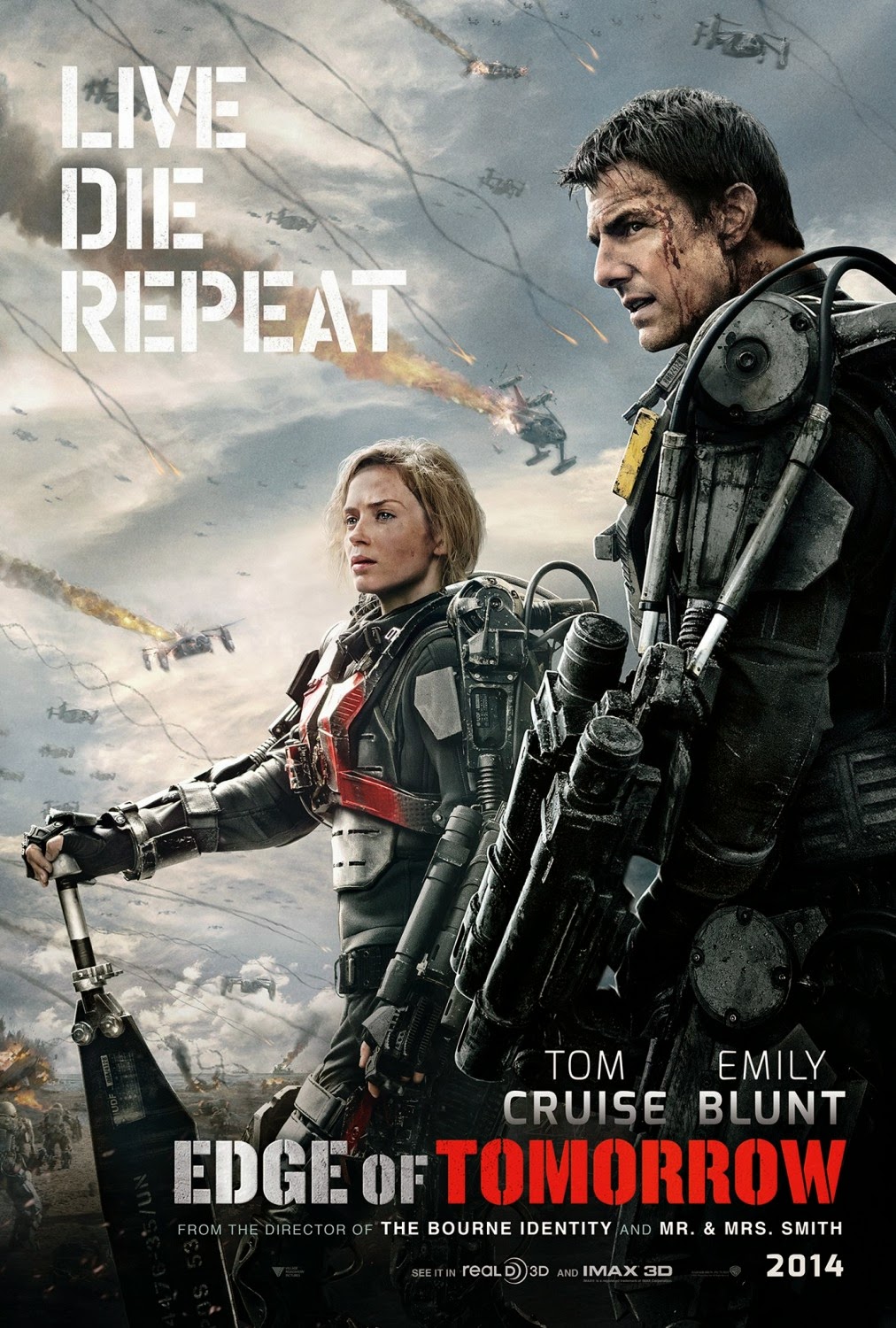
Edge of Tomorrow is the first original action blockbuster of the summer and likely to be, of them all, the biggest success. The others would be Snowpiercer and Lucy, both of which seem pretty unique and come from directors with solid reputations (the former comes out in August and the latter started in limited release last week). The premise and plot of this film feels familiar, like its been pieced together from varying parts of iconic blockbusters from the past 25 years, but it tells its story so well that you don't mind. The most oft made comparison is as a sci-fi action iteration of the masterpiece Groundhog Day. And rightly so. There's something in that idea of reliving the same day - of realizing the potential for change that exists inside of 24 hours - that is rich with story-telling potential and that sparks our imagination. Cashing in on that curiosity, Edge of Tomorrow delivers plenty of entertainment as a smart, fun, and emotionally-engaging summer blockbuster should.
In the near future Earth has been hit by a meteoroid containing an alien force that proceeds to attack the human race, taking over much of Europe. A global army is amassed and a special tool, a mechanical suit, turns the average enlistee into a super-soldier, better equipped to fight what are called Mimics - quick, multi-armed, mechanical-seeming aliens akin to the sentinels from The Matrix. Emily Blunt plays Rita, the femme fatale public face of victory for the war against the Mimics. She's a legend, known for having killed over 100 mimics in one battle - she's called the Angel of Verdun to the reverent and the Full Metal Bitch to the fearfully adoring. As the most decorated warrior of the force, and as an icon among soldiers, she holds a special authority, like the Achilles of her time.
Tom Cruise plays Cage, an officer that specializes in PR, spinning stories through multimedia campaigns to help fight the war of public opinion for the army and its leadership. He's a bit slimy at first, but because he's Tom Cruise you can't help but love him. After miscalculating the moral compass of a general, he winds up powerless, reduced to the office of private, labeled a deserter, and with orders to join a D-Day-type invasion happening on the coast of France the next day. He's not the type to fight but you realize that he's going to end up in battle and there's nothing he can do about it. Within a few minutes of joining the battle he dies. And then he wakes up right where he was the day before - about to get processed and assigned to his unit. This shouldn't be any surprise - it's the basic premise of the movie. You can get the details when you watch it, which I recommend you do - but basically he needs to relive this day again and again, ensuring it ends with either his death (causing a reset) or the destruction of the entire enemy force. Fairly early on he confronts Rita and establishes that she's been through this before (although she lost this ability) and that she thinks he can help win the war.
I'll mention Groundhog Day again because much of the second act plays out similarly. You'll have a lot of fun seeing Cage attempt new tactics to advance farther in his mission. After establishing a routine to get the attention of Rita, they set to training and planning the best way to destroy the mimics. Unlike the Bill Murray comedy, though, instead of ending each day after a full 24 hours, Cage's day must end with his death (much like Source Code). This reset-by-death brings a freedom to him that only comes from the knowledge that you can try it all again tomorrow. And this is where the real magic of the situation starts to change Cage and his approach to life and those around him, especially Rita. The confidence he has in confronting those things he's already done over and over again translates into an ability to more expertly deal with the situations that result from his success at getting closer to the goal. We can see that Rita has already reached this level of existence and is glad to have someone who understands.
The real reason we love a movie like this is because we like to imagine taking on every day as if we were an expert at that day. Surely some days feel monotonously like every other day and perhaps we'd like to imagine being put in a situation where we are forced to confront life with a different attitude. Whether or not every day of your life is just the repetition of a routine, the reality is that each day truly is an opportunity to make a world of difference, and just like Phil the weatherman in Puxatawney, PA, realizes the only one trapping you in life is yourself, Cage comes to take control. In the third act the certainty of his regeneration comes into question and the lasting nature of the decisions he makes sets in, but he has a new perspective with which to make them.
The action is straightforward with no shakey-cam because the story demands you know what's happening. The editing style is quick, avoiding the need to repeat sections of the day beyond what is necessary, while rarely devolving into an extensive montage, which the film could easily do. The audience isn't always told which iteration of the day Cage is experiencing and so you're never sure if this is the first or the fifteenth time he's been in this situation until you see it play out. Both Cruise and Blunt play their characters supremely well with convincing chemistry and earnestness.
--- Spoiler Alert!!! --- If you don't want to discuss the ending don't read! ---
While the repetition of the middle section provides the fun and escalating action, the third act brings with it opportunities for some emotional reflection. Without the insurance of knowing he can always try it again, Cage, as you should know if you already watched the film, loses his power to reset. Now on his last chance to live that day, he starts the rest of his life. He comes to grips with the fact that he can't relive the day again. The thing he does keep, though, is the knowledge of the power of change he has simply by using the knowledge and skills he's gained. As he uses that, fighting along side of Rita to the very end, he now is running towards the source of the war instead of away from it as he did at the beginning of the movie. As he makes the ultimate sacrifice at the film's climax, and only after he has given his life, knowing full well he can't have it back, it is given to him again. As he goes to find Rita in the final moments of the film, and as he stares at her and laughs right before the credits roll, he's finally able to envision a future that includes her and now he has the freedom of perspective that enables him to envision a radical reality and to choose to make that happen.
In the near future Earth has been hit by a meteoroid containing an alien force that proceeds to attack the human race, taking over much of Europe. A global army is amassed and a special tool, a mechanical suit, turns the average enlistee into a super-soldier, better equipped to fight what are called Mimics - quick, multi-armed, mechanical-seeming aliens akin to the sentinels from The Matrix. Emily Blunt plays Rita, the femme fatale public face of victory for the war against the Mimics. She's a legend, known for having killed over 100 mimics in one battle - she's called the Angel of Verdun to the reverent and the Full Metal Bitch to the fearfully adoring. As the most decorated warrior of the force, and as an icon among soldiers, she holds a special authority, like the Achilles of her time.
I'll mention Groundhog Day again because much of the second act plays out similarly. You'll have a lot of fun seeing Cage attempt new tactics to advance farther in his mission. After establishing a routine to get the attention of Rita, they set to training and planning the best way to destroy the mimics. Unlike the Bill Murray comedy, though, instead of ending each day after a full 24 hours, Cage's day must end with his death (much like Source Code). This reset-by-death brings a freedom to him that only comes from the knowledge that you can try it all again tomorrow. And this is where the real magic of the situation starts to change Cage and his approach to life and those around him, especially Rita. The confidence he has in confronting those things he's already done over and over again translates into an ability to more expertly deal with the situations that result from his success at getting closer to the goal. We can see that Rita has already reached this level of existence and is glad to have someone who understands.
The real reason we love a movie like this is because we like to imagine taking on every day as if we were an expert at that day. Surely some days feel monotonously like every other day and perhaps we'd like to imagine being put in a situation where we are forced to confront life with a different attitude. Whether or not every day of your life is just the repetition of a routine, the reality is that each day truly is an opportunity to make a world of difference, and just like Phil the weatherman in Puxatawney, PA, realizes the only one trapping you in life is yourself, Cage comes to take control. In the third act the certainty of his regeneration comes into question and the lasting nature of the decisions he makes sets in, but he has a new perspective with which to make them.
The action is straightforward with no shakey-cam because the story demands you know what's happening. The editing style is quick, avoiding the need to repeat sections of the day beyond what is necessary, while rarely devolving into an extensive montage, which the film could easily do. The audience isn't always told which iteration of the day Cage is experiencing and so you're never sure if this is the first or the fifteenth time he's been in this situation until you see it play out. Both Cruise and Blunt play their characters supremely well with convincing chemistry and earnestness.
--- Spoiler Alert!!! --- If you don't want to discuss the ending don't read! ---
While the repetition of the middle section provides the fun and escalating action, the third act brings with it opportunities for some emotional reflection. Without the insurance of knowing he can always try it again, Cage, as you should know if you already watched the film, loses his power to reset. Now on his last chance to live that day, he starts the rest of his life. He comes to grips with the fact that he can't relive the day again. The thing he does keep, though, is the knowledge of the power of change he has simply by using the knowledge and skills he's gained. As he uses that, fighting along side of Rita to the very end, he now is running towards the source of the war instead of away from it as he did at the beginning of the movie. As he makes the ultimate sacrifice at the film's climax, and only after he has given his life, knowing full well he can't have it back, it is given to him again. As he goes to find Rita in the final moments of the film, and as he stares at her and laughs right before the credits roll, he's finally able to envision a future that includes her and now he has the freedom of perspective that enables him to envision a radical reality and to choose to make that happen.
Friday, June 27, 2014
All Is Lost by J.C. Chandor
The title of this film by J.C. Chandor, All Is Lost, is a state of mind that its main character, a solitary old man sailing in the Indian Ocean and played by Robert Redford, does not let himself enter until the utmost moment of loss. Building a story to fit precisely around that idea within the setting given, the filmmaker displays a level of craftsmanship - on his second feature - that leaves me feeling excited for what his career has in store. As carefully orchestrated as Alfonso Cuaron's Gravity and as riveting as the director's own first feature film, Margin Call, All Is Lost is an exercise in basic, concise, and utterly-focused filmmaking. It's a thrill to watch and a pleasure to contemplate.
In an interview discussing the movie, Redford said he was interested in the part because it seemed like it would be a purely cinematic experience. He explained that for him, that meant a very visual narrative, that it could almost be a silent film. As I consider that term, "cinematic," in the context of this movie I think of the strengths that film has over other media for artistic expression. First and foremost is the ability to grab and hold the attention of the audience by providing both sight and sound. And as an extension of that, it is a way to communicate through a sort of mind meld, without the need for an explicit description of what is happening. You just watch, think, and feel. Certainly there are oodles of wonderful films with plenty of witty or dramatic dialogue, narration, or other forms of written and verbal communication. And "cinematic" could also be interpreted many other legitimate ways, but as far as high impact, emotional, and visual storytelling goes, that old, handsome devil is right: All Is Lost is a purely cinematic experience.
Watching the trailer or merely looking at the movie poster tells you all you really need to know of the premise: a man sailing in deep, ocean waters is confronted with a situation that looks like its only headed from bad to worse. It's not too much of a spoiler to say that the burden of helpful resources at the disposal of Our Man (the character's name in the credits) gets lightened throughout the length of the film. Indeed, Chandor explains briefly in a commentary track that the loss (a key word, being part of the title) of each physical item or asset in the film may correspond with an equally distressing, but perhaps ultimately relieving emotional shedding.
The only verbal clue we're given of Our Man's origins is the contents of a letter, read at the introduction of the film but written much later. An excerpt goes, "I'm sorry... I know that means little at this point, but I am. I tried, I think you would all agree that I tried. To be true, to be strong, to be kind, to love, to be right. But I wasn't... All is lost here... except for soul and body... that is, what's left of them..." That certainly seems consistent with common notions of deathbed contemplations. It sounds like a man that realizes he could've done better (don't we all). An allegorical hint we're given comes near the beginning of the struggle as his high-tech navigation gear gets doused with sea water. We see him leafing through a copy of "Introduction to Celestial Navigation," presumably for the first time. Later on he pulls out an unused sextant. You would think if you were doing a major solo trip across an ocean that learning how to get your bearings the old fashioned way would be a priority. You might also think a man in his 70's would have developed a strong sense of spirituality (aka, celestial navigation) throughout life's ups and downs.
For me, the idea of embarking on a journey like this seems noble and brave, and so it's easy to like this guy. His grace under fire is impressive - but also not unrealistic. The serenity and focus with which he confronts a series of disastrous, life-threatening situations just points out that sometimes survival only comes by keeping your head in the here and now. He rarely takes the time to reflect on his predicament. On one hand, that trait is key to his survival. On the other, if we consider that he may have lived his whole life this way, that unreflective nature may be the reason behind what he writes. Perhaps there is a lesson that life has been trying to teach him that won't come any other way.
All Is Lost is another entry in a strain of films, like Gravity, Castaway, or The Truman Show, where learning comes only along with going to the edge of life and deciding to hold on. J.C. Chandor's ability to draw out that essence of the story is a result of a laser-focus on communicating that concept and only making decisions, both planned and spontaneous, that get right at the heart of his purpose. After watching some of the featurettes on the blu-ray you realize that although it's an indie film with a presumably small budget, the filmmaking team is efficient and exacting in the production process, and yet still able to allow the serendipitous, in-the-moment surprises become a part of the movie. I admire that adherence to craft while working in a medium that, by necessity, is collaborative and, I expect at times, desperate. Chandor's a director whose future work I look forward to with anticipation.
Other notes:
- It's a visually stunning film, despite being so simple. There are over 300 visual effects shots, only a couple of which are obvious, and in these it is only because logically you wouldn't expect them to actually put Robert Redford on a small sailboat in the middle of a raging storm. And there are quite a lot of shots you might be tempted to think are fake but are indeed completely real. He really did jump into that lifeboat.
- Alex Ebert, lead singer of Edward Sharpe & The Magnetic Zeros, does a fantastic job with the score. I'll toot my own horn and say that I suspected something in the main theme that very subtly smacked of Edward Sharpe and so I was smugly satisfied when I saw Ebert's name in the credits (I have a witness to confirm this - both my prediction and the smugness).
- Although some have understandably felt that Chandor's two features, Margin Call and All is Lost, are miles apart from each for being so different (I'm look at you Matt Zoller Seitz, I would say he has a penchant for showing people dealing with situations that are falling to pieces before them. That's a line I'm making from only two points, but still, the name of the next movies he's working on is A Most Violent Year.
- Robert Redford gives the performance of a lifetime and it really is too bad he wasn't nominated for an Oscar. Looking back at the field of competition for that award, I definitely think there was some room for him despite the range of talent that were represented.
Subscribe to:
Posts (Atom)